Place
Citadel
Supposedly constructed by the long-extinct Protheans, this colossal deep-space…
Location: Milky Way / Serpent Nebula / Widow
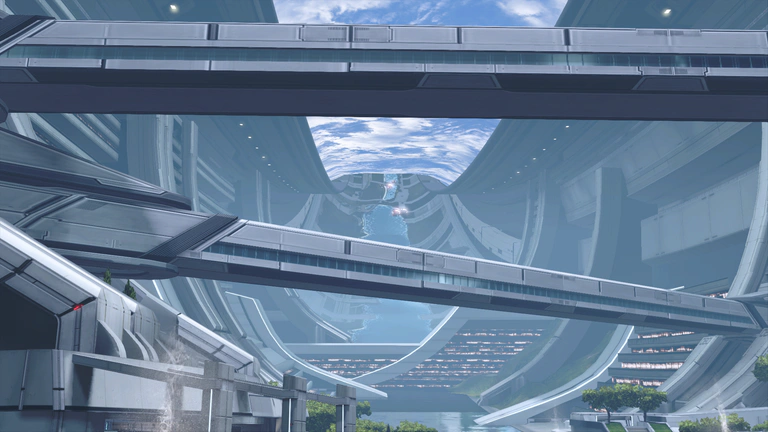
Supposedly constructed by the long-extinct Protheans, this colossal deep-space station serves as the capital of the Citadel Council. Gravity is simulated through rotation, and is a comfortable 1.02 standard G's on the Wards and a light 0.3 standard G's on the Presidium Ring.
Total Length (Open): 44.7 km Diameter (Open): 12.8 km Population: 13.2 million (not including keepers) Gross Weight: 7.11 billion metric tons
Modern Discovery
The asari were the first race to discover the Citadel in 580 BCE, soon after learning to use the mass relays. They were joined shortly by the salarians, and soon after, the volus. As other races were contacted by the asari, or discovered the station independently, they gained embassies on the Citadel and came under the jurisdiction of the growing Council, eventually comprising the asari, the salarians, and the turians.
Strategically located at the junction of a number of mass relays leading to various parts of the galaxy, the Citadel quickly became a hub of activity. The station was chosen to house the Citadel Council, thereby cementing its importance in the galactic community. It is accepted to be the political and cultural heart of Citadel space, the unofficial name given to all systems that fall under the Citadel species' control.
Even after thousands of years of occupation, the Citadel retains many secrets. The precise age of the station is not known, nor what resilient material it is constructed from. The location of the Citadel's core and its master control unit, regulating systems such as life support and navigation, remain hidden. The most visible, and perhaps intriguing, mystery of the Citadel concerns its caretakers, the keepers. These mute alien creatures maintain the Citadel's vital systems, and can be seen working throughout the station, yet, despite this, little is known about them.
Crucible and Catalyst
At the height of the Reaper invasion in 2186, the races of the galaxy unite to construct the Crucible, a superweapon of ancient design with the power to destroy the Reapers once and for all. The final and most important component of the Crucible is the Catalyst, which is revealed to be part of the Citadel. Unfortunately, the Illusive Man learns of this and flees to the Citadel, where he alerts the Reapers of the galaxy's plans. The Reapers respond by seizing control of the Citadel, moving it into Earth's orbit to protect it. Though some occupants are able to flee before the arms close, the rest suffer an unfortunate fate. With the Crucible unable to dock at the sealed station, Alliance leaders determine that someone must get inside the Citadel to manually open its arms.
During the battle for Earth, Commander Shepard boards the Citadel via a transport beam and opens the Wards to allow the Crucible to attach to the station. Shortly afterward, Shepard meets the Catalyst - now revealed to be the Intelligence that controls the Reapers. Shepard must then choose between destroying the Reapers, controlling them, or merging organic and synthetic life. Upon deciding, the Crucible releases its energy and the Citadel, with its Wards now open to their maximum extent, amplifies it and transmits it to the Charon Relay, which in turn transmits it to the rest of the Mass Relay network.
If Shepard chooses to destroy the Reapers, the Crucible's energy severely damages the Citadel and mass relays, but they are eventually rebuilt. If Shepard chooses to merge synthetic and organic life, the Citadel and mass relays are severely damaged, but rebuilt with the help of the Reapers. As the five wards were left largely intact in these two cases, it is possible that some of the Citadel's inhabitants managed to survive on them and were rescued. If Shepard chooses to control the Reapers, the Citadel remains intact but the relays are damaged. Shepard, now in control of the Reapers, directs them to rebuild the relays.
Layout
The Citadel is a massive construct, similar in shape to a pentagram. It consists of a central ring 7.2 kilometers in diameter, from which five arms protrude, each 43.6 km long and 330m thick.
The station is capable of closing in on itself, via the convergence of its five arms, transforming it into a long, impenetrable cylinder. However, the Citadel is only closed in times of emergency, and normally the station retains its 'open' appearance.
The central ring and five arms are home to the Presidium and Wards respectively; the spaceports are also located on the central ring, as it is the center of rotation, facilitating easier access for ships attempting to dock with the station.
The Citadel has a labyrinthine interior superstructure, accessible through keeper tunnels.
Presidium
The Presidium is a massive, park-like complex containing the offices of the various branches of the galactic government, as well as the embassies of all the races represented in the Citadel. There are also shops, restaurants and recreational facilities, serving the wealthy residents who live and work throughout the sector. The Presidium is monitored by a Virtual Intelligence named Avina, and, unlike the Wards, incorporates an artificial 20-hour day schedule: lights are dimmed, and the holographic "sky" darkened, for 6 of the 20 hours, imitating the familiar day-night cycle.
Citadel Tower
The tower at the center of the Presidium houses the Council Chambers and the main traffic control for the station—any ship within a few thousand kilometers comes under the jurisdiction of Citadel Control. The Chambers themselves are not open to the public and access is only granted to officials and those with special clearance. They are beautifully furnished, with cherry trees and fountains, as well as numerous staircases leading up to the central platform where the Council convenes.
Wards
The "arms" of the Citadel, known as the Wards, constitute the residential and commercial sectors of the station. Densely populated, housing millions of residents from many galactic species, the Wards are akin to Earth cities such as Hong Kong and Singapore.
Numerous skyscrapers rise from the superstructure, sealed against vacuum, as breathable atmosphere is only maintained to a height of approximately 7 meters. Unlike the Presidium, there is no artificial day-night cycle; as a consequence of this, commercial activity rarely ceases, and residents work and rest according to personal need. Barla Von appropriately dubs the area the cultural heart of the Citadel, and therefore of Citadel space.
The Wards are policed by the Citadel Security Services (C-Sec), whose offices and custody suites are located in the Lower Wards. Flux is a popular night club, also located in the Wards. The Wards are also home to the Silversun Strip, a bustling commercial area featuring Silver Coast Casino, Castle Arcade, Armax Arsenal Arena, and the apartment complex Tiberius Towers. Below the Wards, the Citadel Archives function as a repository for artifacts and records deemed important.
Defenses
As befits such an important galactic location, the Citadel boasts multiple layers of defense. The first is the Serpent Nebula itself: the nebula's composition is such that it is difficult for attacking fleets to navigate, thus preventing them from launching a concerted attack.
Another link in the Citadel's defensive chain is the Citadel Fleet. The fleet is a massive task force consisting mostly of turian vessels but also including ships from the other Council races. The Citadel Fleet, led by the imposing asari dreadnought Destiny Ascension, constantly patrols the space around the station. However, should any aggressor manage to break through the Citadel Fleet, reinforcements from all over the galaxy are only minutes away, due to the network of mass relays located nearby.
If any enemy gets close enough, the station is capable of closing in on itself to form a long, armored cylinder, 45 kilometers in length. The station's hull is sufficiently strong that, even when subjected to the most advanced weaponry available, it would take several days of sustained bombardment to inflict any serious damage to the superstructure.
The station also boasts its own internal security force, known as C-Sec. The 200,000 officers patrolling the station handle everything from customs to hostage negotiations.
The Citadel also has turrets to ward off small craft, such as dropships.
Unique Inhabitants
Duct Rats are poor, homeless children of the Citadel who travel in the ventilation system of the station. They often die by sudden deadfalls; laceration by fan blades; starving to death; or suffocating because of exposure to the open vacuum of space. Oftentimes, they are just never found. Thane Krios sometimes used duct rats, Mouse among them, to gather information on his targets in the Citadel. The keepers are a mysterious, bio-engineered insectoid race that are native only to the Citadel. They are found throughout the Citadel in random locations, and are harmless. They are believed to be created by the Protheans as the caretakers of the Citadel.
Duct Rats
Keepers
Mass Effect
Mission: Citadel: Expose Saren
Mission: Citadel: Garrus
Mission: Citadel: Shadow Broker → Citadel: Wrex
Mission: Race Against Time: Final Battle
Mass Effect Galaxy
• Mission: Into the Abyss
• Mission: Protect the Council
Mass Effect 2
Mission: Citadel: Captain Bailey
Mission: Citadel: The Council
Mission: Dossier: The Master Thief
Mission: Garrus: Eye for an Eye
Mission: Kasumi: Stealing Memory
Mission: Thane: Sins of the Father
Mass Effect 3
Plot Missions
Mission: Priority: The Citadel I
Mission: Priority: The Citadel II
Mission: Priority: The Citadel III
Galaxy at War Missions
Mission: Apien Crest: Banner of the First Regiment
Mission: Aria: Eclipse
Mission: Aria: Blood Pack
Mission: Aria: Blue Suns
Mission: Athena Nebula: Hesperia-Period Statue
Mission: Benning: Evidence
Mission: Citadel: Alien Medi-Gel Formula
Mission: Citadel: Asari Widow
Mission: Citadel: Barla Von
Mission: Citadel: Batarian Codes
Mission: Citadel: Biotic Amp Interfaces
Mission: Citadel: Cerberus Automated Turret Schematics
Mission: Citadel: Cerberus Ciphers
Mission: Citadel: Cerberus Retribution
Mission: Citadel: Cerberus Turian Poison
Mission: Citadel: Chemical Treatment
Mission: Citadel: GX12 Thermal Pipe
Mission: Citadel: Hanar Diplomat
Mission: Citadel: Heating Unit Stabilizers
Mission: Citadel: Improved Power Grid
Mission: Citadel: Inspirational Stories
Mission: Citadel: Kakliosaur Fossil
Mission: Citadel: Krogan Dying Message
Mission: Citadel: Medi-Gel Sabotage
Mission: Citadel: Medical Supplies
Mission: Citadel: Reaper Code Fragments
Mission: Citadel: Target Jamming Technology
Mission: Citadel: Volus Ambassador
Mission: Citadel: Wounded Batarian
Mission: Dekuuna: Code of the Ancients
Mission: Dekuuna: Elcor Extraction
Mission: Hades Nexus: Obelisk of Karza
Mission: Hades Nexus: Prothean Sphere
Mission: Irune: Book of Plenix
Mission: Ismar Frontier: Prototype Components
Mission: Kite's Nest: Pillars of Strength
Mission: Nimbus Cluster: Library of Asha
Mission: Shrike Abyssal: Prothean Obelisk
Mission: Silean Nebula: Rings of Alune
Mission: Valhallan Threshold: Prothean Data Drives
Downloadable Content Missions
Mission: Citadel: Aria T'Loak
Mission: Citadel: Dr. Bryson
Mission: Citadel: Identity Theft I
Mission: Citadel: Identity Theft II
Mission: Citadel: Leviathan I
Mission: Citadel: Leviathan II
Mission: Citadel: Leviathan III
Mission: Citadel: Party
Mission: Citadel: Shore Leave
Mission: Citadel Archives: Escape
Mission: Citadel Arena: Cerberus Challenge
Mission: Citadel Arena: Charity Reaper Challenge
Mission: Citadel Arena: Geth Challenge
Mission: Citadel Arena: Medi-Gel Challenge
Mission: Citadel Arena: Prothean Challenge
Mission: Citadel Arena: Reaper Solo Challenge
Mission: Citadel Arena: Spin Zone Elite Challenge
Mission: Citadel Arena: Thermal Clip Challenge
Mission: Citadel Arena: Unusual Scores
Mission: Citadel Docks: Retake the Normandy
Mission: Citadel Wards: Ambush
Mission: Silver Coast Casino: Infiltration
Mass Effect
• Assignment: Citadel: Asari Consort
• Assignment: Citadel: Doctor Michel → Citadel: Doctor Michel is Safe
• Assignment: Citadel: Family Matter
• Assignment: Citadel: Homecoming
• Assignment: Citadel: I Remember Me
• Assignment: Citadel: Jahleed's Fears → Citadel: Jahleed's Secret
• Assignment: Citadel: Negotiator's Request
• Assignment: Citadel: Old, Unhappy, Far-Off Things
• Assignment: Citadel: Old Friends
• Assignment: Citadel: Our Own Worst Enemy
• Assignment: Citadel: Planting a Bug
• Assignment: Citadel: Presidium Prophet
• Assignment: Citadel: Reporter's Request
• Assignment: Citadel: Rita's Sister → Citadel: Rita's Sister and Chellick → Citadel: Rita's Sister is Safe
• Assignment: Citadel: Scan the Keepers
• Assignment: Citadel: Schells the Gambler
• Assignment: Citadel: Signal Tracking
• Assignment: Citadel: The Fan
• Assignment: Citadel: The Fourth Estate
• Assignment: Citadel: Xeltan's Complaint → Citadel: Xeltan Convinced
Mass Effect 2
• Assignment: Citadel: Crime in Progress
• Assignment: Citadel: Found Forged ID
• Assignment: Citadel: False Positives
• Assignment: Citadel: Krogan Sushi
Cut Content
BioWare: Stories and Secrets from 25 Years of Game Development mentions that proposed names for the Citadel were "Optigon" and "Oculon". The latter is widely referenced throughout the first game's internal data relating to the Citadel. Similarly, the acronym "C-Sec" was also shown to have been "Oc-Sec" at some point.
A combat simulator planned on the Citadel was apparently scrapped during the first game's development. It would have been located in the "Marshals training ground". When the idea was scrapped, that area was remade into the C-Sec academy. A combat simulator was eventually implemented for the game's downloadable content Pinnacle Station, and later for the Armax Arsenal Arena in Mass Effect 3: Citadel.
The following assignments taking place on the Citadel were cut from Mass Effect:
Citadel: A Friend of a Friend
Citadel: Aria
Citadel: Cheaters Never Prosper
Citadel: Oculon Syndicate
Citadel: Save My Sister
Citadel: The Good Doctor
Citadel: The Hate Monger
Citadel: The Mugger
The assignment Citadel: Mysterious Stranger was cut from Mass Effect 2.
Sources
Adapted from the original article, under CC BY-SA 3.0.